Products portfolio
EMP provides design and hardware delivery of complete turnkey systems based on electrically heated Platinum alloy parts.
Usually they comprise:
• Pre-assembled modules consisting of:
- Platinum alloy parts equipped with special flanges for direct electrical heating
- Proper thermal insulation layers
- Anti-magnetic steel case support structure
• Complete heating equipment including temperature control
• Necessary accessories, as for plunger/stirrer mechanics, shears, glass level control, etc.
• Equipment to avoid oxygen bubbles
• Optional equipment for forming processes, like drawing chambers, rollers, etc.
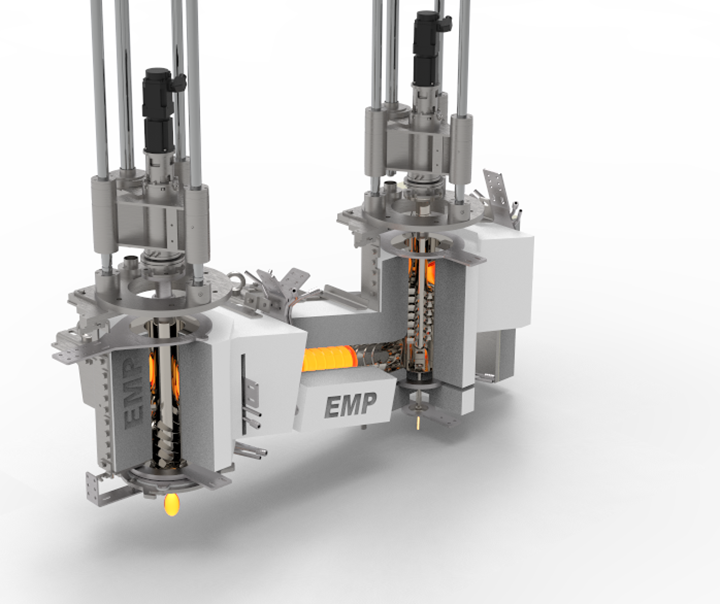
Gob Feeder
Products: Table ware, technical glasses, lenses.
EMP designs and manufactures systems for the production of a wide range of gobs (from several grams up to 5 kilograms). Depending on the required weight range, multiple exchangeable heated orifices can be used.
The gob size and shape are precisely controlled through the rotation and vertical movement of the screw plunger. The gob-forming process can be operated via a touchscreen and PLC control system. According to the glass quality requirements, the system can include a stirrer for cord removal and homogenization, a drain for impurity removal, and a refiner for the bubble removal process. Temperature control in separate heating zones ensures excellent stability and repeatability of gobs.
If needed, the system can also be used for a continuous streaming process for filling larger forms.
Glass Beads Production
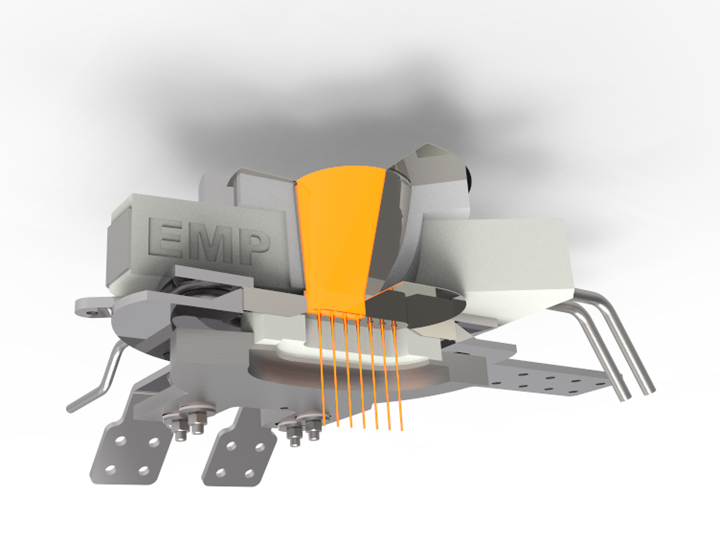
Products: Road marking, abrasive media.
System for multiple glass streams or a single glass stream.
EMP’s design ensures that our systems achieve the required flow rate for each glass stream. The design is tailored to production conditions and the specific properties of the glass.
Depending on customer requirements, the delivery can range from a complete platinum delivery system (from furnace outlet to glass discharge) to a standalone heated orifice.
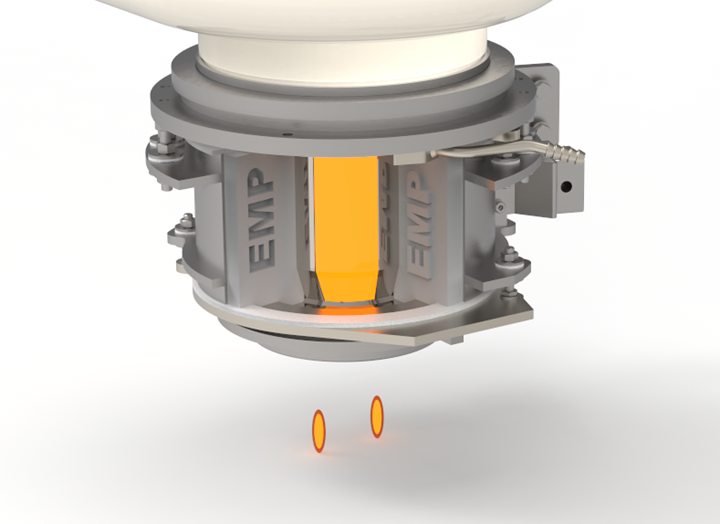
Feeder heating tube
Products: Perfume bottles, Decorative glass, Table-Ware
System for multiple glass gobs or single gob production. The directly heated platinum system can be integrated beneath a standard feeder spout, improving and stabilizing glass temperature conditions.
EMP’s platinum design with direct heating ensures the proper glass temperature is achieved, maintained, and kept homogeneous.
Additionally, job change times — especially for small gobs or low pull rates — are significantly reduced.
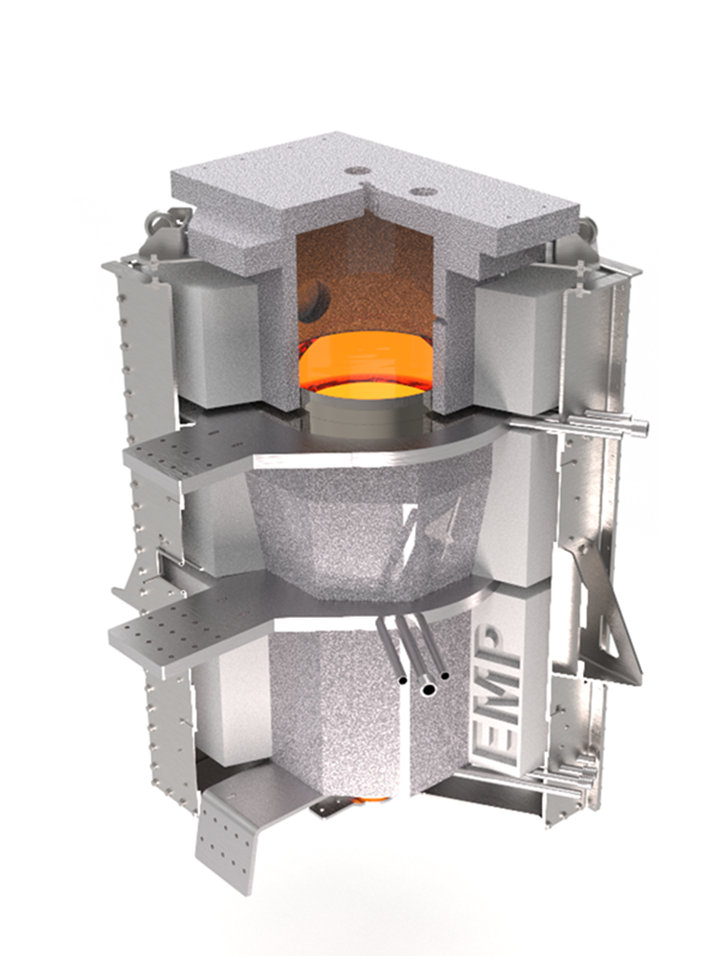
Continuous Pt Melters
Products: different special glasses or glass-ceramics with extreme requirements concerning high melting temperature, purity, homogeneity, bubble contend.
The unique properties of certain platinum alloys, combined with EMP’s advanced design of directly heated platinum alloy components, form the foundation of our melters — which in many aspects surpass traditional refractory melters.
Main advantages:
• Melting temperatures close to 1700 °C can be reached. Because heating power is very homogenous and does not depend on electrical conductivity of molten glass, and glass flow is perfectly controlled without any shortcuts, proper melting of even the most demanding glass types is ensured.
• Due to the exceptional corrosion resistance of platinum alloys, even at high temperatures, there is no contamination of the glass melt from surrounding materials — a problem unavoidable with refractory melters.
• The closed design minimizes evaporation and helps maintain a stable glass composition.
• A precisely positioned, flexible bubbling system improves glass treatment as required.
• The lower part of the melter serves as a compact and energy-efficient refining area.
Each melter is custom-designed to match the specific glass type and production requirements. Capacities range starts from small laboratory units to melters capable of processing up to 1,300 kg per day.
Melters can be supplied as standalone units or as part of a complete production and delivery system. Glass-level measurement can also be integrated.
Tubes and rods production
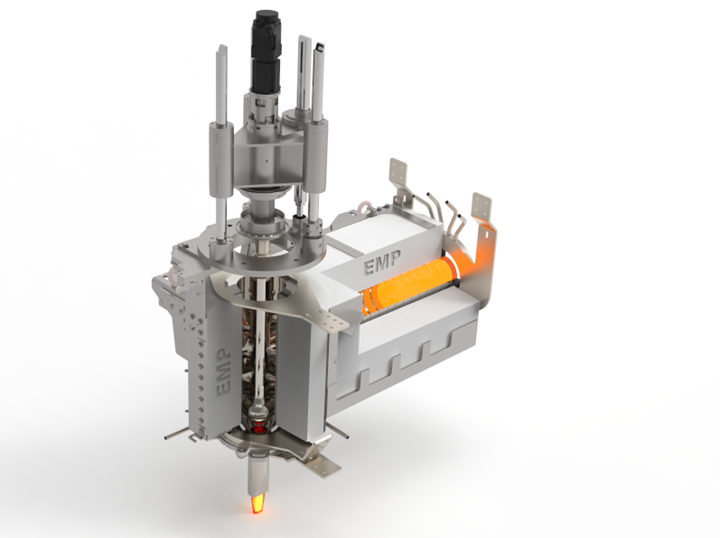
Products: Glass tubes, Rods, Pharmaceutical glass production
EMP designs and manufactures systems for both Danner and Vello types used in the production of glass tubes and glass rods.
A key advantage is the directly heated double-walled orifice, while integrated stirring ensures homogeneous, cord-free glass.
Precise control of glass flow is achieved through a combination of accurate glass temperature regulation and precise plunger position control.
Heated bells for Vello systems — designed for glasses with high crystallization temperatures and large-size products — are also available.
Drain systems
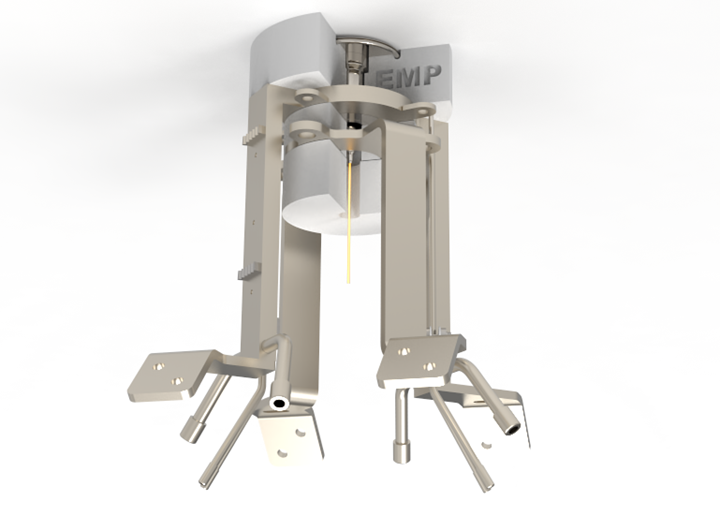
Products: Various glass melters and foreheards
Drain systems can be installed beneath the furnace or forehearth. EMP’s drains are directly electrically heated, with flow rate precisely adjustable through temperature control. The drain shape and heating current density are optimized to ensure a stable and consistent glass flow.
Additional cooling can be integrated as part of the flow control system, allowing for convenient stopping and restarting of the glass flow when required. The entire process is managed via a touchscreen control panel — eliminating the need for manual intervention on-site.
Drain systems can be supplied as standalone units or as part of a larger platinum system.
Refiners
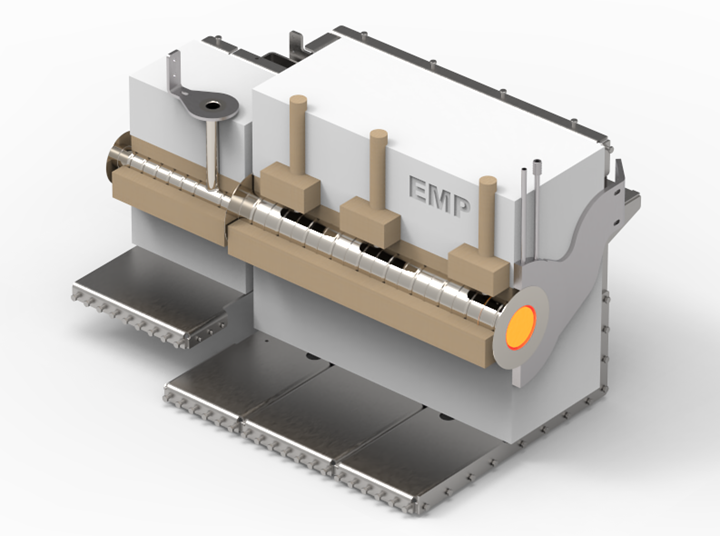
Products: Special sheet glass, Glass fibers, Optical glass
High-temperature refiners are one of the most efficient systems for bubble removal. The functionality of EMP’s refiners has been optimized through glass flow, bubble trace, and structural simulations. As a result, special baffle plates are used, and Pt-inclusions are almost completely eliminated.
Our refiners have been proven in production with capacities of up to 35 tons per day.
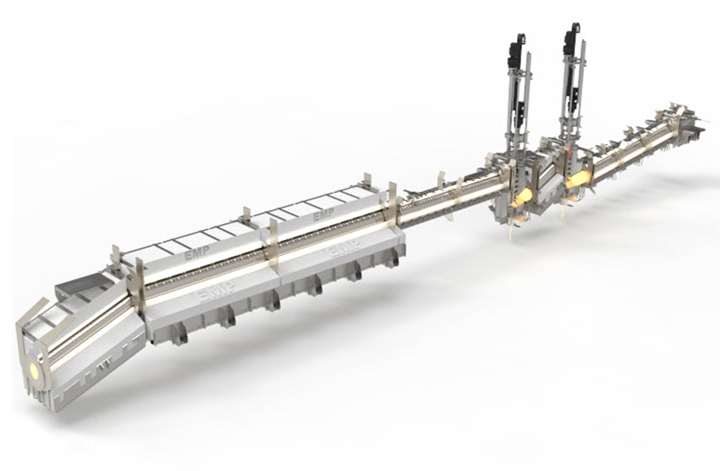
Special sheet glass delivery line
Products: Non-alkali glasses, Special glasses
A complete system providing refining, homogenization, conditioning, and feeding for special glasses across a wide range of pull rates — up to 35 tons per day.
The scope of delivery consists of 8 modules for Platinum alloy parts, heating equipment with PLC-based temperature control, stirrer mechanics, equipment designed to prevent oxygen bubble formation, and glass level measurement.
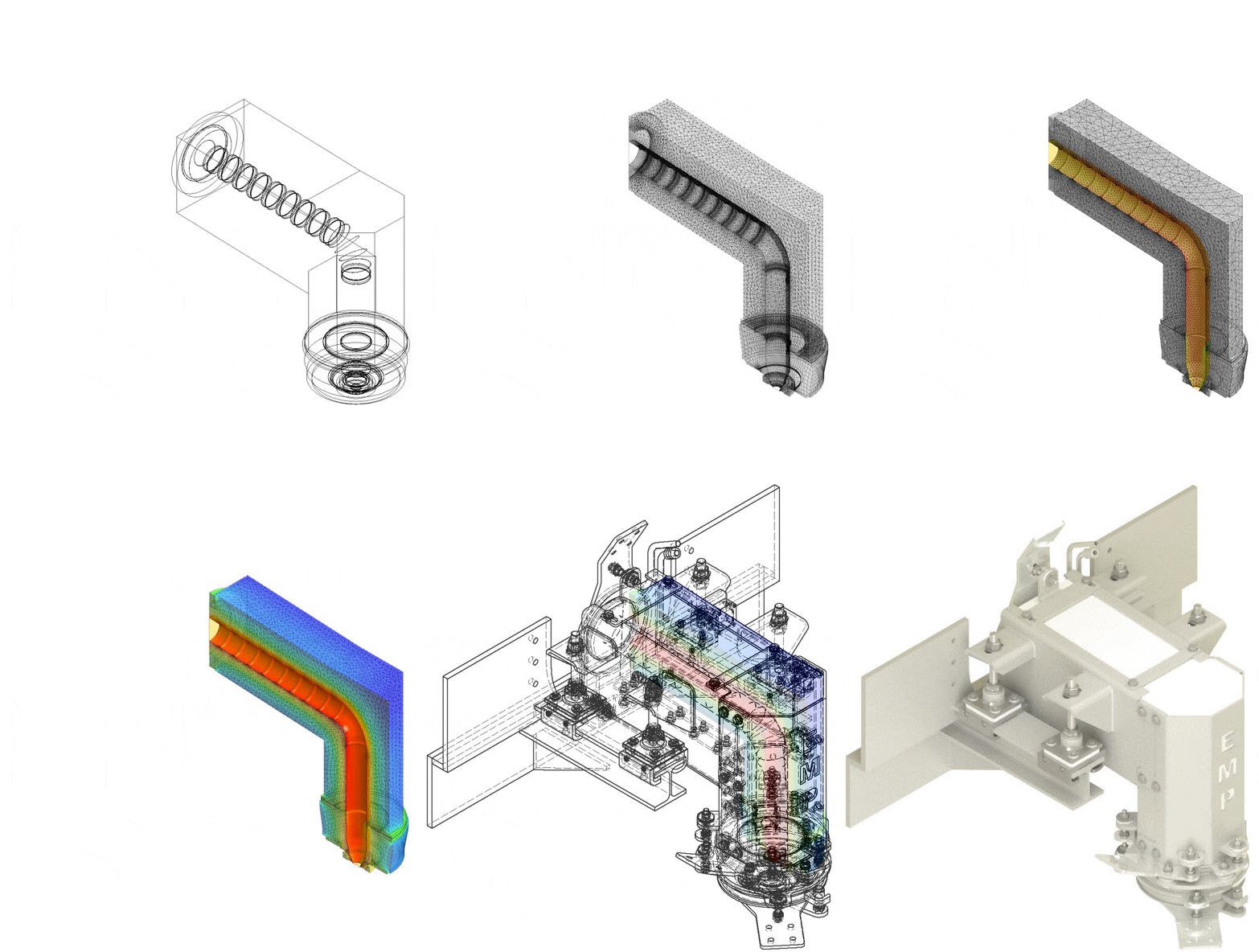
Simulation and design
At EMP, we use advanced mathematical simulations to optimize the design and performance of our glass melting, refining, and feeding systems. Analyses of flow dynamics, temperature distribution, and structural stress ensure maximum efficiency, stability, and product quality.
Simulation results guide the design of platinum components, heating zones, and mechanical parts, providing precise control of glass flow and thermal conditions. This digital approach shortens the development process, reduces material waste, and speeds up the path from concept to final design.
By employing fully electrically heated systems, EMP contributes to lower CO₂ emissions and a more sustainable glass production process. The combination of simulation-driven design and clean electrical heating reduces overall energy demand while maintaining the highest level of process reliability and glass quality.